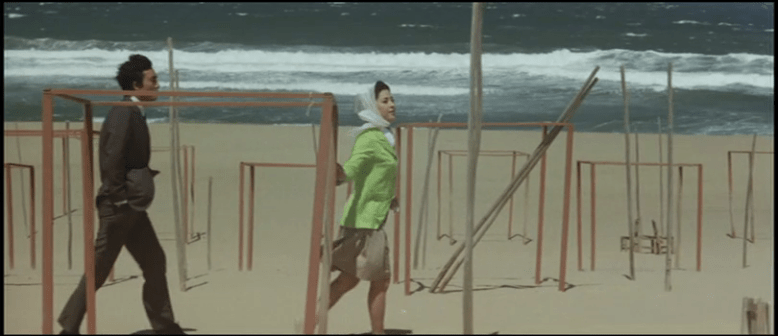
Since catching a number of the screenings during the Kiju Yoshida and Mariko Okada retrospective at the Harvard Film Archive, I’ve been wanting to see さらば夏の光 (saraba natsu no hikari, aka Farewell to the Summer Light), which seems to have a reputation for being Yoshida’s artsiest work. A couple weeks ago, I got the film on DVD and finally immersed myself in this, indeed, artsy cinematic experience. I’m glad I had a chance to watch Farewell, but in the end, I am left to regard it as an ambitious work that resonates with its Japanese and French New Wave contemporaries while falling short of its aspirations and promise.
The film is essentially like the situations and female-male duos of the stunning films Before Sunrise and Last Year in Marienbad were morphed together and played out over a variety of European countries (with an aesthetic somewhat reminiscent of The Passenger); we’re launched right into this exciting proposition—the meeting of two travelers dislocated from their native culture in visually enthralling environs, then further dislocated from the mundane logic of reality in a Murakamian maze of emotions gone metaphysically awry.
But the evocative, epic Farewell to the Summer Light soon falls short of its initial, fantastical potential. The visually luscious scenes in vivid European settings, images oozing with symbolism, philosophical musings, enigmatic characters, wistful, almost melancholy theme song—it seems like all the elements are present to make this film an extraordinary, fanciful psychological odyssey, but the assembly of these components is toppled by irritating distractions: the obvious, curious gazing of passersby into the camera, the peculiarly lilting English of the supposedly American characters, the cliché inevitability of romantic tension then involvement then extreme idealization.
And yet, Farewell to the Summer Light still has a magic and power that lingers on after the almost climactic, then ultimately anticlimactic ending. There’s something compelling about the idea characters meeting over and over, especially in some seemingly significance-laden setting (a scenario captured with eerie claustrophobia, stylized elegance and overt, poetic theatrics in Last Year in Marienbad). Is it because in our minds we sometimes keep coming back to certain people, meeting them time and time again in the course of our thoughts, even if not in the course of our lives?
This slideshow requires JavaScript.
 I didn’t think I’d be as enthralled as I am by The Verge series This Is My Next, but the central idea and its deft execution are really working for me. This has shifted me into exactly the mindset the series has in mind, a mindset that perhaps I should have had for a while in this age of consumer electronic abundance: tell me what’s the best out there—the best smartphone, the best digital camera, the best whatever—cut down my information overload, my choice fatigue, and I’ll gladly take it from there. Sure, there’s a bunch of tech options this trust I’ve placed in The Verge is filtering out, but as a recent episode nicely sums up,
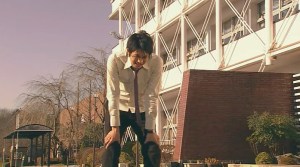 There’s this poignant scene in the Honey & Clover drama where Mayama
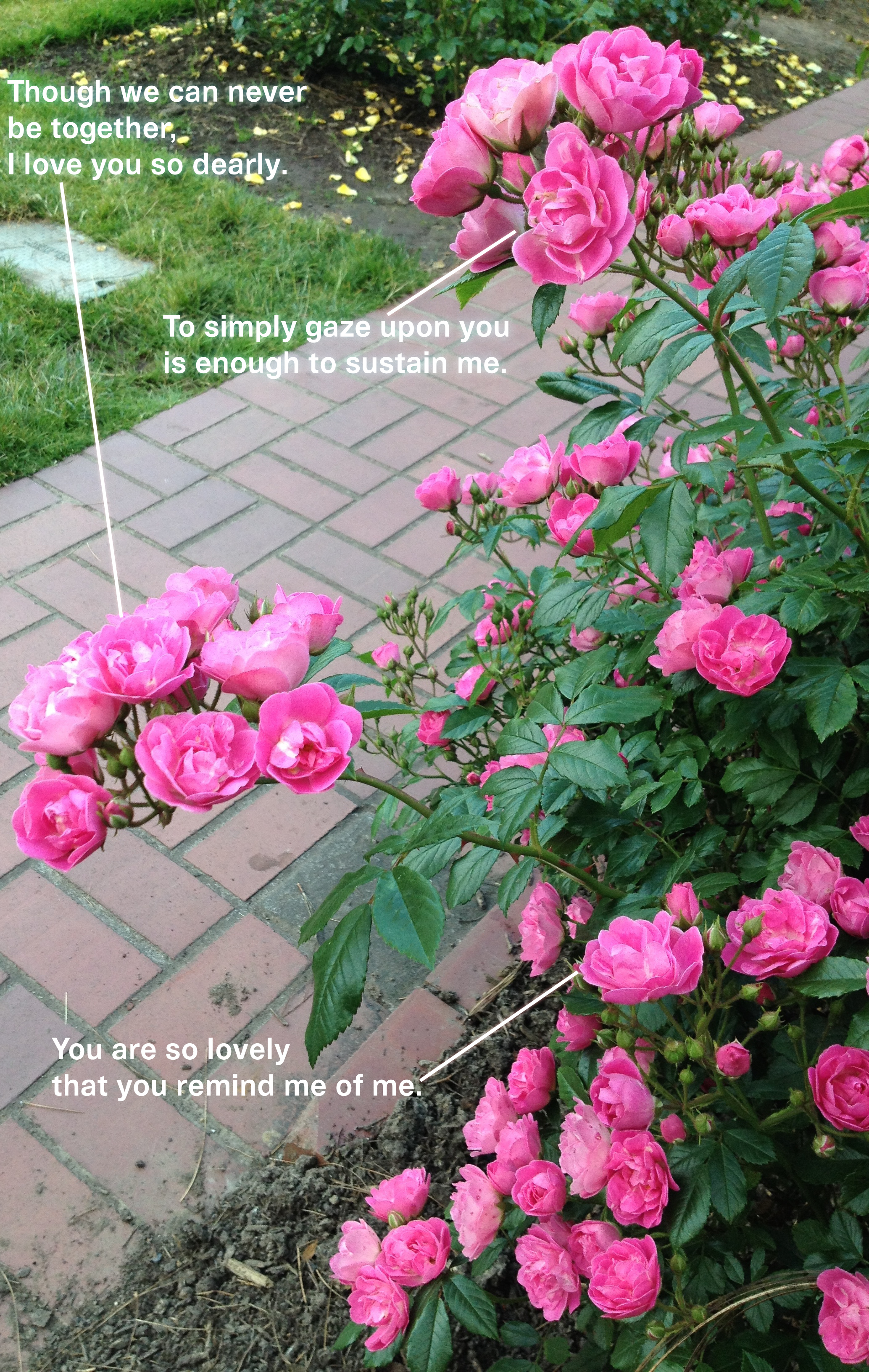
 A Contemplative Compilation