“If you’re not in the arena also getting your ass kicked…

…then I’m not interested in your feedback. Period.”

That’s from Brené Brown’s 99u talk. And there’s so much more good perspective packed in there as well. Love the storytelling approach and the good humor. Give it whirl by hitting the link below.

Brené Brown: Why Your Critics Aren’t The Ones Who Count

Update: pairs quite nicely with this Anna Akana video on sucking, criticism and practice.

Game Changing: the latest from The Story of Stuff

The latest installment of The Story of Stuff, “The Story of Solutions,” is an accessible, even empowering fresh framing of familiar environmental and social issues. Although we’ve bemoaned the shortcomings of GDP as a progress indicator for quite some time, Annie Leonard does an amazing job of explaining this and offering a path forward in just under 10 minutes!

While the analogy of the economy as a game used in “The Story of Solutions” is simple, it’s remarkably effective in its intuitiveness and provides insight for action. I also love that excellent examples of what is working (what Dan and Chip Heath call bright spots in Switch) are mentioned in this video to give us a sense of what we can do now. And speaking of Dan and Chip Heath, with this video The Story of Stuff Project, once again, nails nearly every dimension of stickiness in the Made to Stick SUCCES model. Awesome.

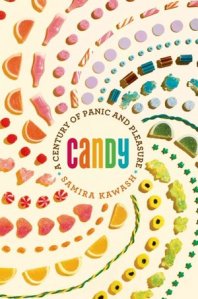
“…but candy is the one that says, `hey, this is a treat’…

Candy, book cover… Candy never says, ‘it’s fiber, it’s vitamins, it’s all natural, it’s good for you. Candy is honest and says, `this is a treat, look at it as a treat, enjoy it as a treat.’ “

I just listened to a Weekend Edition interview with Samira Kawash, discussing what many of us have copiously purchased (or eagerly hope to obtain for free) for tomorrow evening. Some of the delightful and surprising comments mentioned are to me evocative of Steve Almond’s Candy Freak, which was a wondrous tour through (and ode to) part of the candy-making world.

The audio of the interview is fantastic; if you have a few minutes, hit the link above and give it a listen!

A Millennial Manifesto?

When it comes to our careers and our experience at work, we’ve become selfish—but in a good way. Getting paid is no longer enough; we expect to actually learn on the job. We want our skills to be fully utilized and are left unsatisfied with “easy jobs.” We want more responsibility when we’re ready, rather that waiting until we’ve “put in our time.” We expect to do more of what we love, automating the more laborious and monotonous parts of our work. —Scott Belsky, “You’re a Free Radical, Run With It” from Maximize Your Potential.

While the above no doubt applies to a variety of people working towards self-actualization, I feel like I see this a lot with my fellow Millennials—a huge chunk of our generation is busting on to the scene with fierce creativity to tackle issues that we’ve grown up with and largely saw get worse. I think it’s no coincidence that social enterprise and design for social good is exploding as my generation comes of age and finds its place in the story of humanity. I’d like to think Millennials are disproportionately what Scott Belsky calls Free Radicals; I acknowledge, however, that I might still be intoxicated with the optimism of the recent conferences I’ve attended, A Better World by Design and EmTech MIT, in which folks like the TR35 have made tremendous strides to solve pressing problems.

Maximize Your Potential, the new book by 99u.com from which the passage above comes, is a fantastic resource for Free Radicals of any generation, anywhere; it’s loaded with perspectives that resonate and advice that’s insightful and actionable.

Maximize Your PotentialHere are the key headings in Scott Belsky’s piece. I agree with and love everything stated here.

We do work that is, first and foremost, intrinsically rewarding.

We thrive on flexibility and are most productive when we feel fully engaged.

We make stuff often, and therefore, we fail often.

We have little tolerance for the friction of bureaucracy, old-boy networks, and antiquated business practices.

We expect to be fully utilized and constantly optimized, regardless of whether we’re working in a start-up or large organization.

We consider open source technology, APIs, and the vast collective knowledge of the Internet to be our personal arsenal.

We believe that “networking” is sharing.

We believe in meritocracy and the power of online networks and peer communities to advance our ability to do what we love, and do well by doing it.

We make a great living doing what we love.

“What if you’re not the creative genius here…

… and what if there’s not one idea… what if everyone could do what you’ve done in solving these problems around the house? What if it was normal for anyone to redesign their stuff?”
—Jane ni Dhulchaointigh

I often visit the 99u website for tips, guides and inspiration. Here’s a link to a video from their conference that I really enjoyed. While watching it, the words I’ve quoted above really jumped out as reminder of the power of reframing.

Jane ni Dhulchaointigh: The Magic Is in The Process

“You’re alive. Act like it.”

I’m not sure who said that (either Elevated! or Da Poetry Lounge),  but now perhaps what matters is that it was said, boldly as a thunderous command closing an emotionally and linguistically turbulent meditation on the modern human condition. That blazingly delivered poem charged us to again be human.

At the packed, sold-out National Poetry Slam 2013 finals, I was utterly astounded by the powerful voices slam poets gave history, social issues, personal emotions and so much more. The phrases resonating in the air thick with the energy of fandom (for these poets specifically and for poetry generally), those words wove stories that were everything from heartbreaking to uplifting. A boisterous bro duo gleefully shattered the illusion that first-time lovemaking is smooth and sweet; Mr. Freeze, the Penguin, the Riddler, etc. read their letters to Batman recounting tragic life stories, ultimately instructing him to fix the city that created them; a chorus of positivity encouraged us to celebrate how amazing life is, how remarkable it is, among other things, that our lungs and hearts often work tirelessly, unnoticeably; a substitute teacher’s mind races as he ponders over what he will tell a 4th grade girl who declares her aspirations of becoming the best tetherball player in the world, a world where not all dreams can come true, still pervaded by gender discrimination; a slam duet spun dizzying parallel stories of young siblings separately struggling with what society tells them their bodies should be and do… And far more. Sitting there, transfixed by the transformation of voice and bodily motion into sheer passion, provocation, catharsis and communion,  I could barely believe words could do all this and beyond.

Although the details of diction, rhythm, gesture and tone were crystal sharp as they were unfolding during this most astonishing of artistic evenings, that extreme clarity is ebbing, but among whatever is left as time blurs memory will be the unshakable truth that words spoken bellowed, sung, guffawed and cried on stage connected us, pulled those of us in the audience into feelings and experiences perhaps not our own but unmistakably belonging to all of humanity, dared us to look at our past, present and selves, pushed us to move resolutely and justly into the future.

If there’s a slam poetry venue near you, check it out if you haven’t already.

Here’s the short film Slip of the Tongue, one of the pieces that brought me into the world of spoken word and slam poetry.

Fixing What We Broke: the 5th National Conference on Ecosystem Restoration

NCER conference banner

Or maybe it should be “healing what we’ve hurt”. The 5th National Conference on Ecosystem Restoration (NCER) just ended yesterday in Schaumburg, IL with

  • David Doig, President of the Chicago Neighborhoods Initiative, talking about projects going on in Chicago, particularly their work on Pullman Park, and
  • David Donnenfield and Kevin White of Full Frame Productions sharing their work and perspectives on the vital role of storytelling in ecological restoration (the trailer for their excellent film A Simple Question is below).

NCER5 has been an intense four days of presentations, panel discussions, plenary sessions, posters, networking and excellent food. While it’s been great hearing about the work happening in so many places, I’m reminded that there’s still much to be done: more places to work on, people to reach, money to be raised.

Although I am alternatingly skeptical and enthusiastic about bringing business approaches to traditionally non-business enterprises (e.g. education, public infrastructure, etc.), I left the conference thinking that we need to figure out how to make ecological restoration profitable, beyond firms getting contracts from the government for restoration projects. There just isn’t enough public funding to do the kind of work that is needed, and businesses need to step up and do their share, and if money can be fairly made in a way that supports the environment, community and economic growth, let’s go for it. Social enterprise could be a great way for the field of ecological restoration to head.