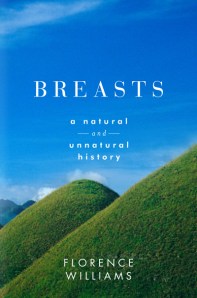
 Breast-feeding is an ecological act, connecting our bodies to the world in a complex web of give-and-take. The permeability of breasts allowed us to make great advances. Their estrogen sensitivity allows us
to reach puberty at optimal times. When our ancestors migrated and settled in river and costal areas, omega-3–rich diets turned their breast milk into gold, and our brains grew. We recruited, harvested, and bred specialized bacteria for our milk; we collected molecules from the world and from our bodies to manufacture novel sugar and fats to protect our babies. Our special low-protein milk kept us growing slowly, so we could have the longest childhoods on earth and learn everything we could.
Our brains grew so well that eventually we learned how to change the world’s ecology. We couldn’t possibly have guessed that we were changing our breast milk as well. Our nouveau crème no longer serves us as well as it once did. Ironically and tragically, breast milk once propelled our evolution, now it may be impeding it by conveying toxins and quite possibly contributing to infertility and brain and body impairments. For many decades, the formula companies have tried to mimic breast milk, but it is breast milk that now may be approximating formula. That is decidedly depressing.—Florence Williams, Breasts.
 A Contemplative Compilation