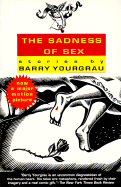
 Almost every autumn, I facilitate a two-hour workshop for high school students that explores and encourages the writing of extremely short fiction. Through nearly a decade of iterations, this workshop has evolved, expanded to encompass Mac vs. PC commercials and Ben Loory’s “The Girl in the Storm”, while contracting to only mention rather than consider the stories of Alan Lightman and David Eagleman. But even with all the exciting new developments in short-form media (the advent of hint fiction, resurgence of interest in short films, etc.), I always have my students read and discuss work by Barry Yourgrau, a pioneer of flash fiction who excels at telling adventures in mere pages or even paragraphs and is a master at mixing the mundane with the magical. Maybe you’ve never heard of him. He seems to be often overlooked, and if it weren’t for one evening over ten years ago, I too might never have heard of him.
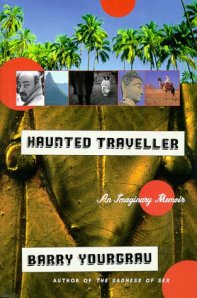 I don’t remember how I ended up there; it was probably mentioned by my creative writing instructor. But what matters is that I did end up there, at a most delightful and extraordinary event for his book The Haunted Traveler in the MIT Media Lab building, where Barry Yourgrau embarked us upon a safari into a realm of literature I’d only glimpsed, acquainting me with a place so enchanting I have never since left. Throughout that evening, over and over, mere minutes with his words would bring me deeply into, through and, before I knew it, out of some strikingly peculiar situation, perhaps humorous, definitely relatable. A man stalking a woman with Cupid in tow, the relationship between a ghost and the music teacher he comes to love, the strife ensuing from furtively watching the dreams of sleeping lover. These stories were uniquely, marvelously enthralling, only roughly characterizable from past experiences as something and nothing like Roald Dahl meets Edward Gorey meets O. Henry. And I was hooked. There was then little choice but to become a denizen of Barry Yourgrau’s universe of mini-worlds that foray into varied topics from familial relationships and perilous travel to romantic affairs and monsters. So many of their scenes and escapades are too good not to share with avid readers and aspiring writers. Continue reading →
 NHK
NHK
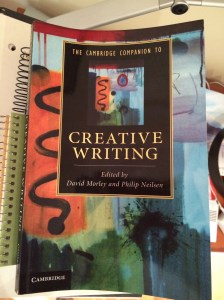 After enjoying David Morley’s fantastic
  A Contemplative Compilation