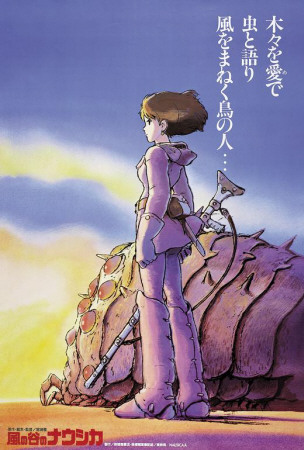
Nausicäa at 30: as relevant as ever

Nausicaa posterHappy 30th, Nausicäa

I require all of my environmental science students to watch this film, in hopes that they’ll see it for the first time ever, or if they’ve seen this anime classic before, that they’ll reconsider its themes with new perspectives.

Nausicäa of the Valley of the Wind is an amazing film and has aged remarkably well. The world it immerses you has been so completely, enthrallingly crafted that soon, once you’ve oriented yourself in the post-apocalyptic landscape, you’ll relate to the characters and their circumstances. Then the action begins, and it’s a riveting ride to the end. And in all that—the huge, monstrous bugs, the fleets of massive warplanes, the Sea of Decay—Hayao Miyazaki shows us perspectives about what it means to be a human surrounded by and dependent upon nature, caught in the complexity of society, thrust into the struggle to shape the future. This is why I’ll be having future students in my classes watching this film as long as I’m involved in environmental education. It’s an epic masterpeice about environmental health, environmental justice, leadership, empathy and so much more.

Admittedly, Nausicäa is almost too perfect of a protagonist. Her will and values are unbelievably strong, but I think that incredulous mettle of hers is necessary. Nausicäa is the stuff of legend, of an ecological mythology that maybe we need now more than ever.

If you’re going to (re-)watch Nausicäa, I suggest going for the subtitled version.

The Hippocratic Oath of Writing and Other Perspectives from Steve Almond

From This Won't Take But a Minute, HoneyEver since Harvard Bookstore started printing it, I’d been meaning to read Steve Almond’s chapbook/mini-book This Won’t Take But a Minute, Honey, and a few years later (after acquiring a copy from Steve Almond himself for a not unreasonable price paid in cash), I finally did. It’s a very readable, compact collection of flash fiction and views on writing, with the latter severely grabbing my attention with pithy, punchy perspectives. Though often stated with an air of certainty, authority or almost sarcastic sagacity, there’s almost a challenge implicit (then finally explicit) in these perspectives/pieces of advice—a dare to one up what Steve Almond stated, and the consideration or even debate that this work may provoke can be valuable to a variety of writers and readers.

Here’s one idea I wound up with after the chapbook ran its course.

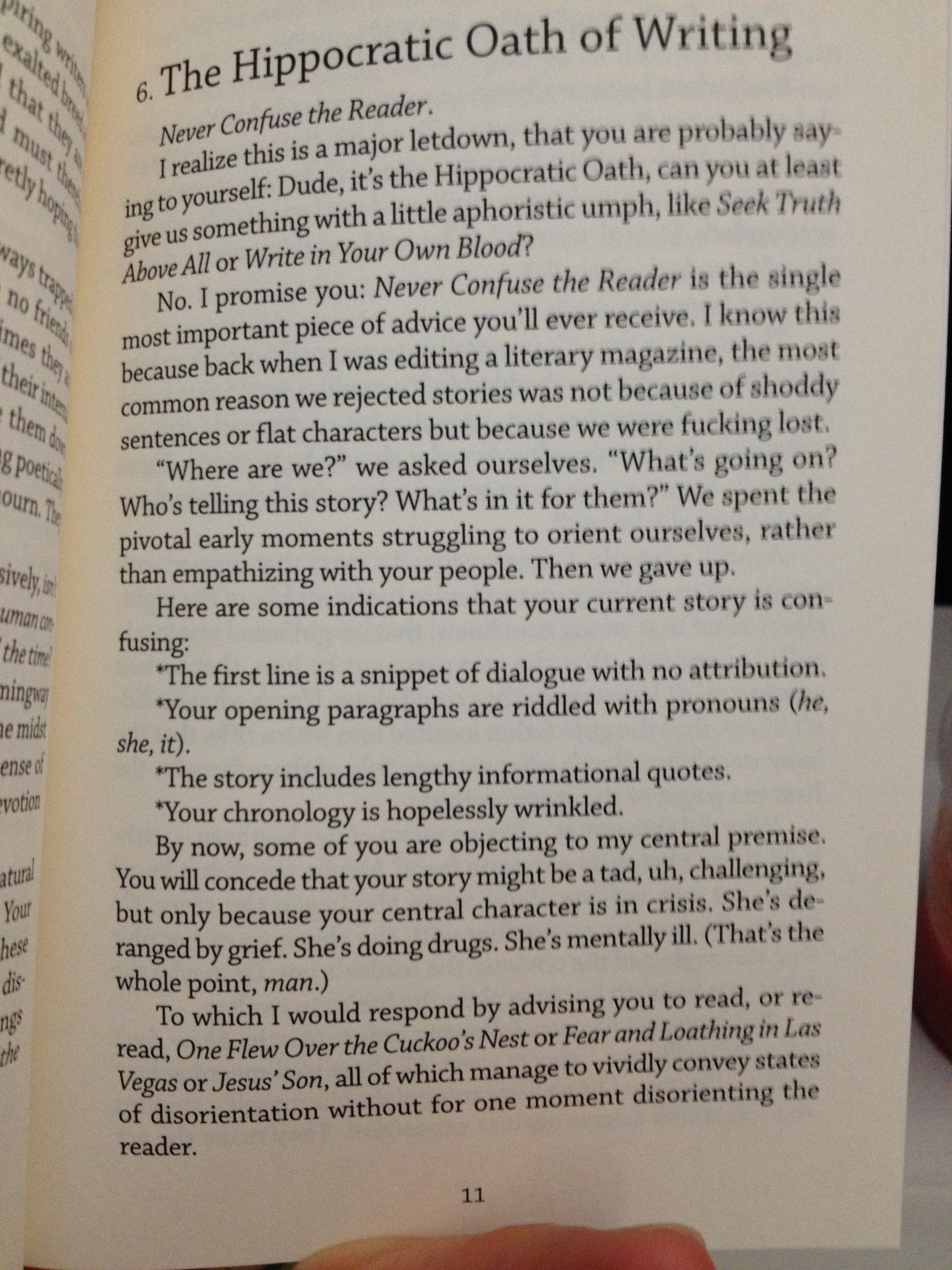
Steve Almond’s “Hippocratic Oath of Writing” (shown below) led me to consider a potential Hippocratic Oath of Teaching: Never confuse the student, in the end. I think learning involves a degree of confusion, of exposing and messing with knowledge gaps, to borrow from Made to Stick. But confusion in the service of understanding. By the end of a topic discussion, semester, college, whatever, a student should not leave confused about an essential truth their teachers/mentors/facilitators have been entrusted with guiding them to. For those of us in education, Never confuse the student, in the end, that is a stupendous charge, and while we can’t ever fully ensure that, it’s an imperative that is essential, always posing the critical question to us as we’re trying to explain something: could this be clearer?

Looks like you can still get this book from the Harvard Bookstore, but if you can get one from Steve Almond himself, that will make for a much more memorable experience.

http://www.harvard.com/book/this_wont_take_but_a_minute_honey1

Sandwiches, Soup and Satomi Kobayashi: パンとスープとネコ日和

Just slightly more eventful than Kana Matsumoto’s earlier work Mother Water and with more of a plot trajectory, brightness and slightly faster pacing than her last feature film Tokyo Oasis, パンとスープとネコ日和 (Bread and Soup and Cat Weather) is an immersive, relaxing, short Japanese drama series that’s quietly beautiful and delightful. With characters drawn from the casts of めがねプールかもめ食堂 (Glasses, Pool, Seagull Diner)、Mother Water and Tokyo Oasis (like Ryo Kase), along with settings and relationships similar to those films, there’s a familiar, airy atmospheric quality to this 4-episode j-drama.

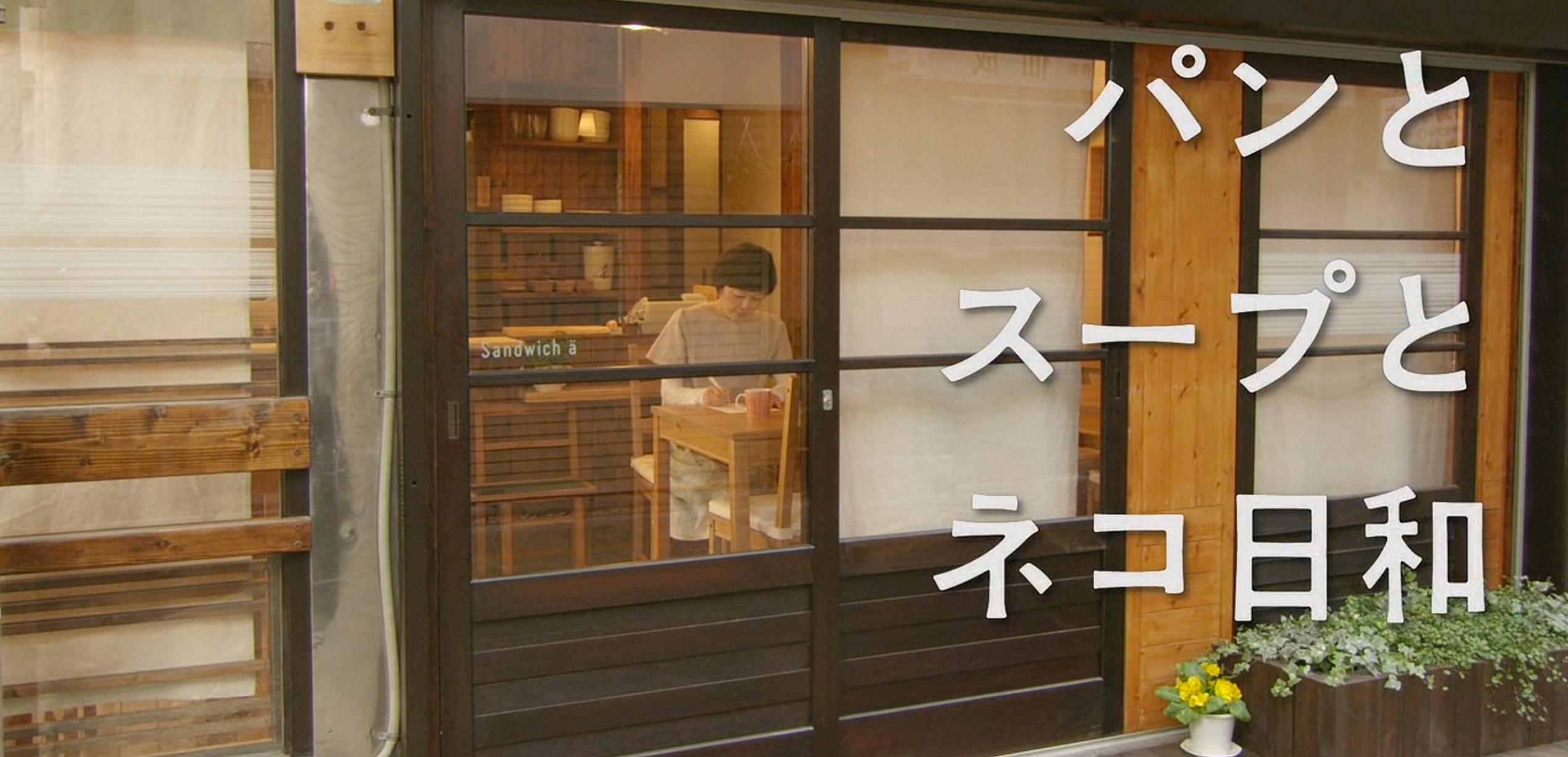
episode 4 title scene

I love how the series brings you into the kinds of cozy places you’ll find in Japan—cafés with simple yet stylistic decor and good, unique food, little side streets of shops and restaurants. It’s also great how there’s time for relationships to be revealed and developed in ways that couldn’t in the movies mentioned above. And the sandwiches and soups look delicious, reminding me of some of the menu items at the Hi-Rise Bread Company in Cambridge, MA and at Soup Stock Tokyo.

If you’re interested in watching the series, the DVD set will be released in just a couple days on January 15th and can be purchased via CD Japan or Amazon Japan.

There are only a few clips from this series on YouTube. Here’s a fun one from the ending of the series (no spoilers) featuring all the characters めがね メルシー体操-style. This part is much quirkier than the rest of the film which is highly quotidian and may border on understated for some viewers—I prefer to think of the film’s ambiance as unhurried, leisurely and thoughtful.

The Patterns Trilogy: David Lynch Meets Wes Anderson Meets J. Crew?

The recent Saturday Night Live parody trailer of a Moonlight Kindgom/Royal Tenenbaums-esque horror film (below) reminds me that Wes Anderson’s distinctive visual aesthetic and unique storytelling sensibility has become so renowned—and rightly so as this auteur’s films are marvelously artistic and charmingly delightful.

It also reminds me of Jamie Travis’ The Patterns Trilogy which has its own striking and engrossing stylistic idiosyncrasies that are reminiscent of the works of Wes Anderson, David Lynch and Edward Gorey, yet create for me a novel, visually and narratively enthralling, genre-defying cinematic experience. With each installment, The Patterns Trilogy is gradually ever more perplexing and unnervingly humorous, while tinged with odd disquietude and subtly sinisterness. I still love it even two years after first coming across it.

The Patterns Trilogy trailers themselves are mini-masterpieces.

NaNoWriMo kicks off today!

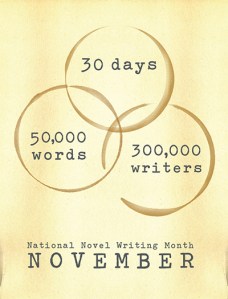
NaNo Poster2.47

It’s now National Novel Writing Month (NaNoWriMo)! Although I won’t be taking part this year (to preserve the quality of other projects and the mental energy they need—though admittedly, frenetically writing a novel could be highly invigorating and re-sanitizing…), I am once again excited to find out what happens and am generally thrilled about the very idea of writing an entire novel in 30 days in the company of other literary creatives; it’s invigorating to know there’s a chunk of time proclaimed for a collective challenge to craft substantial fiction. And there’s so much great stuff on NaNoWriMo.org, like listings of local events, fun posters and ways to get encouragement from fellow novelists.

Good luck to all you November novel writers out there!

Gravity is as good as (or better than) they say it is

In his Fresh Air film review, David Edelstein is right on about Alfonso Cuarón’s Gravity. As is The Verge in theirs. There’s been so much good press and word of mouth about this film, I couldn’t help but enter the movie theater with high expectations. But Gravity surpasses all of them. I know people can fuss over the scientific accuracy, but its utterly, mind-blowingly convincing realness in its luminous, looming hugeness in the darkness of a cinema is so epically engrossing, suspension of all disbelief is easily achieved.

If you haven’t seen it yet, you should. Preferably without watching any of the trailers, like the one below.

My Millennial Anthem

Since getting this song during my weekend at the A Better World by Design conference, I can’t stop listening to “Shape the World” by Tim McMorris; it seems to recombine so many messages and feelings I’ve been encountering in recent years as my generation endeavors to find its place in humanity’s story.

Shazam, you’ve done it again, allowed me to take a snippet of song and add it to the soundtrack for private and social moments; thanks!

Still Awesome: Mirai Mizue

I recently got the CALF DVD compiling a number of Mirai Mizue’s animations, and it’s rather fascinating, bizarrely at times. My favorite is “MODERN”, embedded below; the soundscape makes the transformation of geometric shapes all the more mesmerizing, atmospheric and science-fictionally/abstractly futuristic. At times, “MODERN” reminds me of the game Edge, but remains to me in a category of its own. I’d love to see “MODERN 2” at a screening or on DVD at some point.