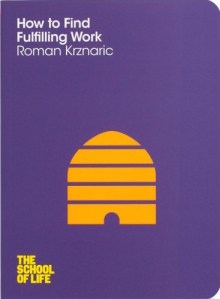
Toward Self-Actualization In Career: How to Find Fulfilling Work vs. Alternatives

The title of this blog post may be somewhat of a misnomer, because WordPress won’t allow me to italicize or underline words in that title. It’s not referring to finding fulfilling work vs. settling on drudgery that pays the bills; it’s referring to the School of Life’s book and video How to Find Fulfilling Work and how it compares to a few other resources of the same ilk.

Imagine five parallel universes, in each of which you could have a whole year off to pursue absolutely any career you desired. Now think of five different jobs you might want to try out in each of these universes.—from How to Find Fulfilling work
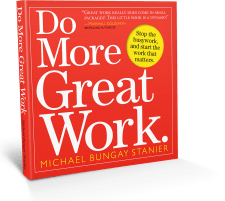
Do More Great Work, coverWhile the book How to Find Fulfilling Work and its accompanying summary video (below) offer some good thought-prodding perspectives, I’ve found that beyond the exercises offered in the book, How to Find Fulfilling Work is not as directly actionable as the guidance given in Do More Great Work and Finding Your Element. Those two books contain nicely guided activities aimed at leading you to specific and useful insights. Also, Simon Sinek’s Why Discovery Course is an invaluable approach to the “know yourself” portion of  How to Find Fulfilling Work‘s recommendations, and Simon Sinek’s discussion of The Golden Circle in Start With Why (and his now classic TEDx Talk, embedded below) provides an excellent framework for understanding not only our own nature but that of organizations and movements.

How to Find Fulfilling Work is a good starting point, but readers of it should go beyond it by taking its advice to “think a lot” and structure that thought with additional resources.

What helpful resources for self-actualization and career fulfillment have you found?

Learn about happiness, learn to be happier

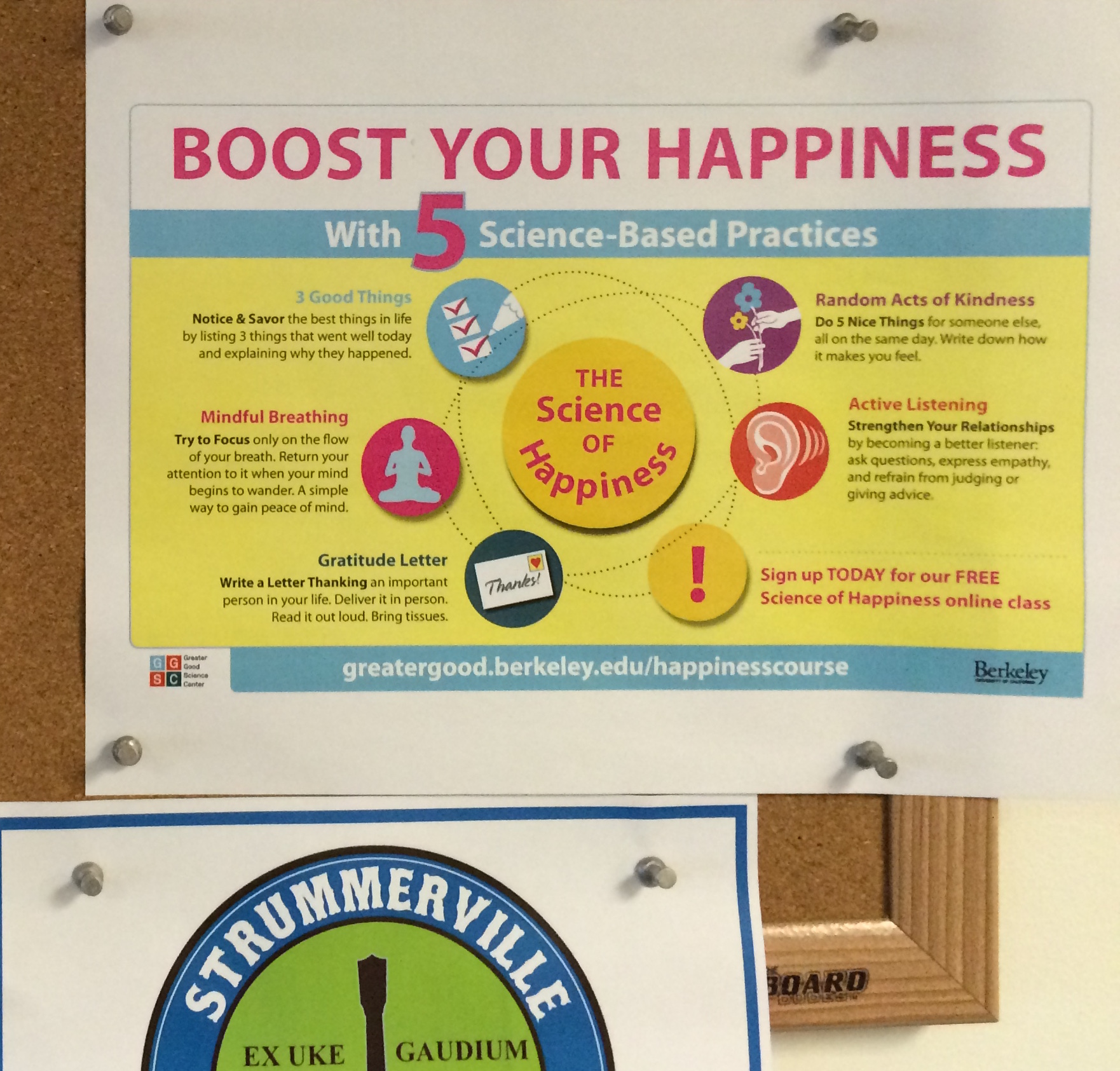
IMG_5370This flier for the edX course The Science of Happiness really caught my atttention recently; as a participant in this course and as someone who is interested in wellbeing, I was delighted to see this course publicized via good, old-fashioned bulletin board.

As an educator, I’m often skeptical of MOOCs; I really like the in-person discussion and hands-on learning the “traditional classroom” makes possible, but certain topics and approaches lend themselves well to an online approach (I think Lynda.com absolutely nails it), and edX’s The Science of Happiness is one such case where the course material works well in web-based experience.

I’ve been working on this course for a couple weeks now, and so far, it’s an informative, engaging consolidation on recent happiness (and related well-being) research presented in a straightforward way that’s even directly actionable at times. It’s what I would expect from the course instructors who work at the UC Berkeley Greater Good Science Center. The GGSC is a much need entity that collects and produces so much great material on, as they put it, “the science of a meaningful life.” I’ve been reading their articles for a few years now, and this course is the logical culmination of several enlightening, empowering thematic arcs in their work.

This edX course is self-paced, so if happiness is a topic that interests you, just jump right in!

Oh, dang: Invisibilia episode 5

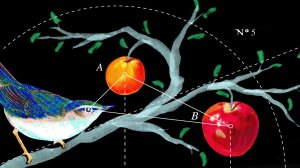
bird_diagram_final_wide-f57ad53cb648cd6a830907907811e189be432798-s1400-c85Wow. From kittens & puppies to categories to gender to culture to death. Invisibilia is once again quite a journey, interweaving personal perspectives with scientific research through compelling storytelling. This show still totally tops my charts and lists.

But my heart breaks just a little bit when I hear Lulu or Alix upspeak unnecessarily (Alix never seemed to do that in her news reporting!). Fortunately, there isn’t much of that in this episode.

Dang, I love you, NPR. TED Radio Hour, Invisibilia, Fresh Air, All Things Considered, Morning Edition, Radio Lab… you’re just nailing it.

Brené Brown, Karen Russell, David Linden: best podcasts episodes of my weekend

If you like an informative, insightful podcast episode every now and then, try the three below; they each enthralled me this snowy weekend. (In case you’re wondering why Invisibilia isn’t mentioned, I’m saving the latest episode for an evening of sheer exhaustion.)

Fingertips To Hair Follicles: Why ‘Touch’ Triggers Pleasure And PainFresh Air discusses various facets of the sense of touch with neuroscience researcher David Linden.

The Courage to Be Vulnerable—shame & vulnerability researcher expert guru Brené Brown converses thought-provokingly with On Being‘s Krista Tippet.  

Karen Russell On Balancing Writing, Technology, and Boredom—host of his eponymous show Leonard Lopate and author Karen Russell talk about technology, writing and boredom.

A Fun Week Wraps Up Constructively: The Conclusion of Bored and Brilliant

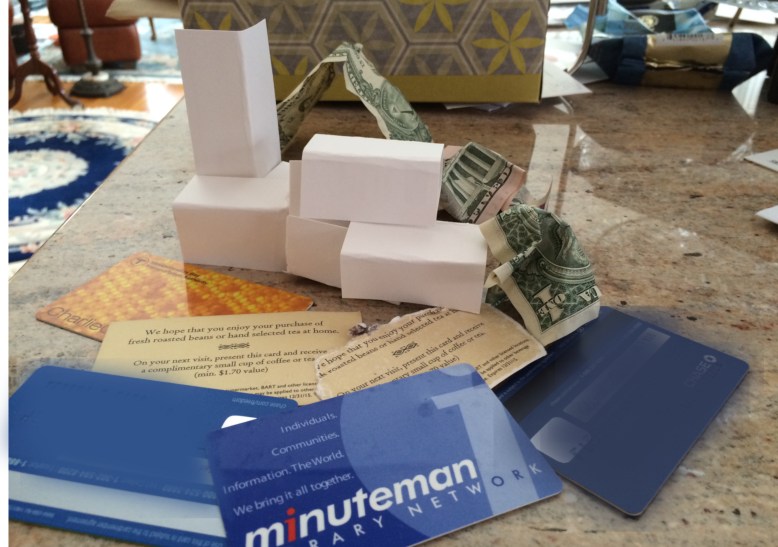
6. Dream House: tasked to build an ideal abode with the contents of my wallet as the last Bored and Brilliant Challenge (this one coming from artist Nina Katchadourian), here’s what I came up with: Verdant Hills, Lakeshore Solarium (situated somewhere in Western Massachusetts or Oregon, maybe Northern California or Shikoku if it came to that…)
IMG_5326a
As you can see, I don’t keep much in my wallet, keeping it slimmed down and comfortably pocketable. No receipts, no rewards cards, no coins—I deplore metallic currency; as soon as I’ve accumulated enough change to meet the $5 minimum for getting a no-fee gift card from Coinstar, I’m at one of their machines, dumping those coins.

BoredBrillant_NTC_SquareWhat a fun week! Thanks, New Tech City! Loved all the insights from research and wonderful interviews you shared with us, along with all the great prompts to tame some of our tech behaviors! I wish this were a month of challenges, but maybe now it’s time to continue building the challenges into habits. Looking forward to upcoming episodes and hearing about how other listeners experienced Bored and Brilliant…

Eagerly Awaiting: Bored and Brilliant’s finale is tomorrow

16216863478_bf12a7db47_mIt’s been a fun week of Bored and Brilliant challenges from WNYC’s New Tech City. I’m psyched to see how this all wraps up with the final challenge tomorrow.

Here’s a rundown of how the week has gone for me…

  1. In Your Pocket: the challenge of keeping my phone in my pocket/bag while in transit was made way easy by being snowed in; I don’t use my phone as much when I’m at home, opting for a computer as my portal for all things Internet (66 minutes on my iPhone; about half of that was streaming video in the evening).
  2. Photo Free Day: I didn’t take any photos… but I did record some video; the snowy woods were just too scenic during my late afternoon walk. (77 minutes)
  3. Delete That App: Tasked to delete my most time-sinking app, I was stumped;  Continue reading

Open Notebook: The Cambridge Companion to Creative Writing

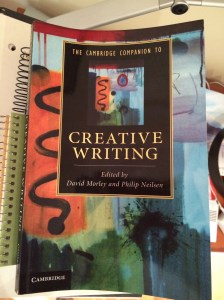
IMG_5141After enjoying David Morley’s fantastic Writing Challenges podcast, I decided to take a look at the book David Morley co-edited with Philip Neilsen, The Cambridge Companion to Creative Writing. Overall, this collection of articles offers some helpful perspectives (ranging from philosophical to practical) and exercises for creative writers. Here are a some lines that resonated with me.
What are you challenging yourself to do that makes it worthwhile for the reader to join you?—Kári Gíslason, “Travel Writing”

Is it not the point of art, both the production and the experience of it,
to transcend your own reality, your own autobiography?—Jewell Parker Rhodes, “Imaginative crossings: trans-global and transcultural narratives”

…to “write what you know” fosters provincialism. —Jewell Parker Rhodes, “Imaginative crossings: trans-global and transcultural narratives”

My admonition is to write what you can dream… write what you wish to discover… write what you need to about human nature. Stories, for me, have always been a wish fulfilment — an opportunity to make my life larger by stimulating my intellect, deepening my empathy, and connecting rather than distancing my self from others.—Jewell Parker Rhodes, “Imaginative crossings: trans-global and transcultural narratives”

…the writing workshop isn’t about being published… it is about being more deeply alive.—A.L. Kennedy, “Does that make sense?”

I currently believe that writing is a way of life, that it is a massively demanding discipline, that it is an almost irresistible source of enrichment, expression and change.—A.L. Kennedy, “Does that make sense?”

Writing consists of a multitude of individual decisions, massive and complex control of language in depth and considerable personal responsibility…—A.L. Kennedy, “Does that make sense?”

Continue reading

Just Read: The Meaning of Human Existence

Exalted we are, risen to be the mind of the biosphere without a doubt, our spirits uniquely capable of awe and ever more breathtaking leaps of imagination. But we are still part of Earth’s fauna and flora, bound to it by emotion, physiology, and, not least, deep history. It is folly to think of this planet as a way station to a better world.

Picking up where The Social Conquest of Earth left off, EO Wilson continues to tell the story of humanity in The Meaning of Human Existence. With such a suggestive title, this book could very be about humanity’s destiny, and while there is certainly some discussion of that, of our potential as a species, this book feels to me largely concerned with what it means to be human from a variety of perspectives.

Although you may not come away with a sense of what our purpose is, reading this book is tremendously worthwhile, even (or especially?) Continue reading

Open Notebook: quotes from The Organized Mind

Quotes from the fantastic book The Organized Mind (points that were particularly interesting to me are in bold).

The Organized Mind at the Harvard BookstoreChapter 1

Satisficing is one of the foundations of productive human behavior; it prevails when we don’t waste time on decisions that don’t matter, or more accurately, when we don’t waste time trying to find improvements that are not going to make a significant difference in our happiness or satisfaction.

…satisficing is a tool for not wasting time on things that are not your highest priority…

…unproductivity and loss of drive can result from decision overload.

The decision-making network in our brain doesn’t prioritize.

Every status update you read on Facebook, every tweet or text message you get from a friend, is competing for resources in your brain with important things like whether to put your savings in stocks or bonds, where you left your passport, or how best to reconcile with a close friend you just had an argument with.

Attention is the most essential mental resource for any organism. It determines which aspects of the environment we deal with, and most of the time, various automatic, subconscious processes make the correct choice about what gets passed through to our conscious awareness.

…attentional switching. We can state the principle this way: Switching attention comes with a high cost.

Our brains evolved to focus on one thing at a time.

The formation of categories in humans is guided by a cognitive principle of wanting to encode as much information as possible with the least possible effort

We are hardwired to impose structure on the world

…shift the burden of organizing from our brains to the external world. Continue reading

Exploring Livable Streets, Environmental Art and Workspace Layout at A Better World By Design 2014

So back in the summer, I was trying to decide whether I should attend if it’s worthwhile to attend the design conference A Better World by Design (AWBxD). Now, here I am on the campuses of RISD and Brown University attending conference talks and workshops! While some of the workshops are quite amateur in nature (i.e. feel not well developed and not well facilitated), some of the ABWxD speaker sessions and other workshops have been fantastic. Here are a few of my faves so far…

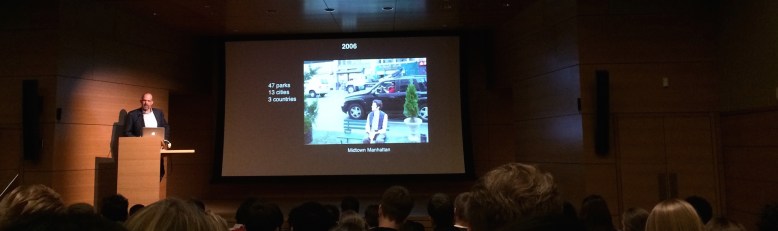
Aaron Naparstek got us well acquainted with livable streets, showcasing some amazing urban re-design work from around he world and particularly in NYC, improvements to cities that allow them to better integrate bicycles, pedestrians and green space to become more lively.

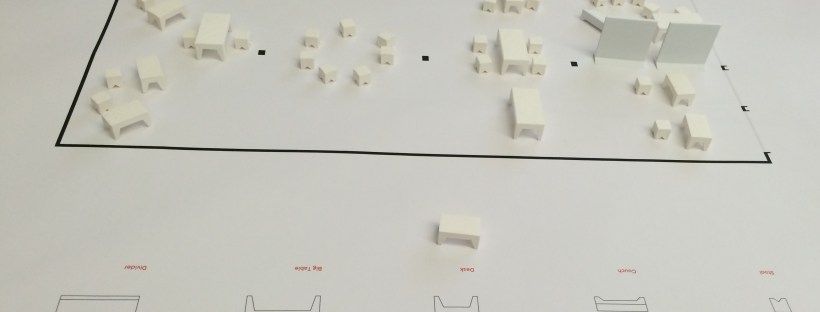
The folks from Work-Shop kicked of their session by giving us a super-basic floor plan and 3D-printed model furniture and having us work in small groups Continue reading