Info Mantra—Infomagical day 5

56b3d54a60c1c8686798625aAfter being tasked to come up with a personal information consumption rule by the final Note to Self mini-episode in the Infomagical project, I’m basing my guideline off of the “Best Friend Question” in Dan and Chip Heath’s amazing book Decisive. The BFQ is basically a decision-making strategy that pushes you to gain some distance from your dilemma by asking the question


What would I tell my best friend to do in this situation?

Drawing upon this, Continue reading

No News—unless it pertains to a goal; Infomagical day 3

Creative_smallWell, looks like I won’t be reading The Verge today.

Infomagical challenge 3 is all about intentional information consumption; time to whole-hog preempt the temptation to mindlessly click from tidbit to tidbit of news. In addition to pushing me to further restrict my information diettoday’s mini-episode of Note To Self offers a fascinating glimpse at 13th-century strategies for coping with information overload. Nice to find out that some of our information wrangling methods are tried-and-truer than I had thought.

Here’s a bit of news that I will be checking out as these items do pertain to my goal of being focused on creativity:

Thanks for the new homescreen! Infomagical, day 2

IMG_6430Moments after unlocking my phone can feel like those times I walk into the kitchen and think, “Why am I here again?” Maybe those moments will now be a thing of the past, at least for today.

This screenshot vouches for my commitment to Infomagical Challenge 2: app tidying.

Will I get irritated by the additional swipes and taps now needed to launch apps? Will I be frantically digitally groping for transit info after unlocking my phone as my commute commences? Will I just absolutely love how intentionally I must now use my phone? Will this be instrumental in building that monochronic work behavior Infomagical Challenge 1 considered? Time to find out.

New Applications For The Age-Old Zen Garden? Infomagical Gets Into Gear Today

image-56a116a8cc273-defaultTime for some serious monotasking.

Today’s Note To Self podcast mini-episode starts a week-long social social science experiment by instructing participants to live life at the speed of one thing at a time—to be monochronic if we must get technical about this. With this charge to be single-minded in today’s activities, it’s time to do whatever it takes to keep focused on what’s at hand—time to use an email auto-reply, turn on do not disturb mode, take off the smartwatch, work in wifi-free zones, maybe even set up a mini Zen rock garden. Should make for some good opportunities to do some deep work.

Just Watched: Alice In The Cities

Another kind of magical realism.

vlcsnap-2016-01-21-21h16m58s825
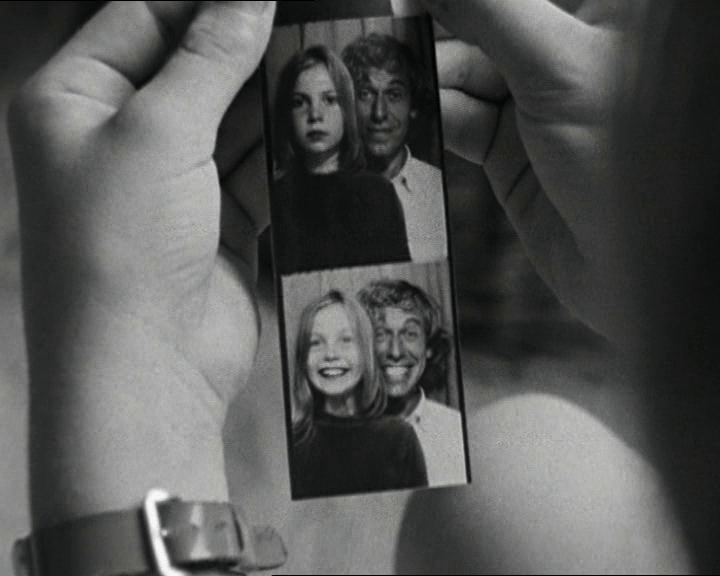
A film so realistic that it captures those magical moments between two strangers becoming more than that.

Once again, expatriates roam European cities and existential territory, but this time, moving through the latter all happens naturally and implicitly. The film grapples with the ideas of human belonging, connection and responsibility but always keeps them in the concrete forms of characters’ actions and interactions; it’s practically all “show” and little if any “tell” with regards to the psychology of the characters. Moments when Philip and Alice yell at each other or become distracted or try to share things with one another, these slivers of time are inhabited by personality traits pushed and pulled out of the psyche and into reality by the vicissitudes of their journey.

I hope Alice In The Cities soon joins the other films of Wim Wenders available in the US from The Criterion Collection.

Fast, Faster, Fastest: Zigeunerweissen, the one and… infinite?

Maybe it was the recent Hidden Brain episode on Maya Shankar’s path from violin virtuoso to policymaker, or perhaps it was numerous viewings of Seijun Suzuki’s avant-garde film of the same name, but whatever the reason, I’ve gotten rather intrigued by various recordings of Pablo de Sarasate’s “Zigeunerweissen”—just tumbling headlong down the rabbit hole of its insanely fast ending with that mind-blowing pizzicato. Each performance by virtuoso violinists brings a new layer of nuance and idiosyncratic interpretation to this iconic piece.

At almost a full minute under the Itzhak Perlman recording (once you subtract out the seconds of silence), Julia Fischer’s precise yet emotive performance is stunning. But to pick a favorite among these exceptional performances would be to grossly and inadequately shortchange the nature of these extraordinary violinists and of Sarasate’s work.

Continue reading

Just Read: (In A Sense) Lost & Found

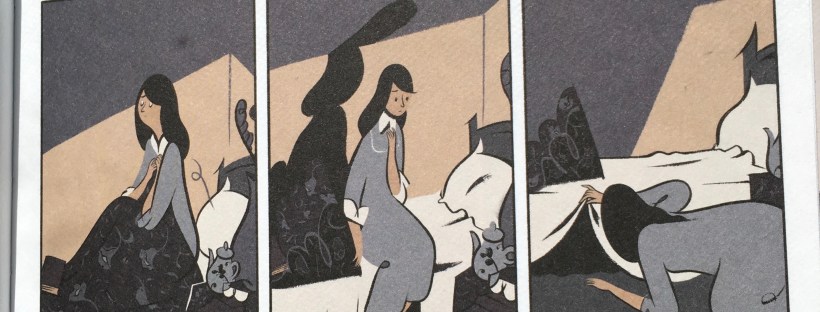
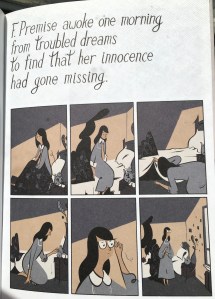
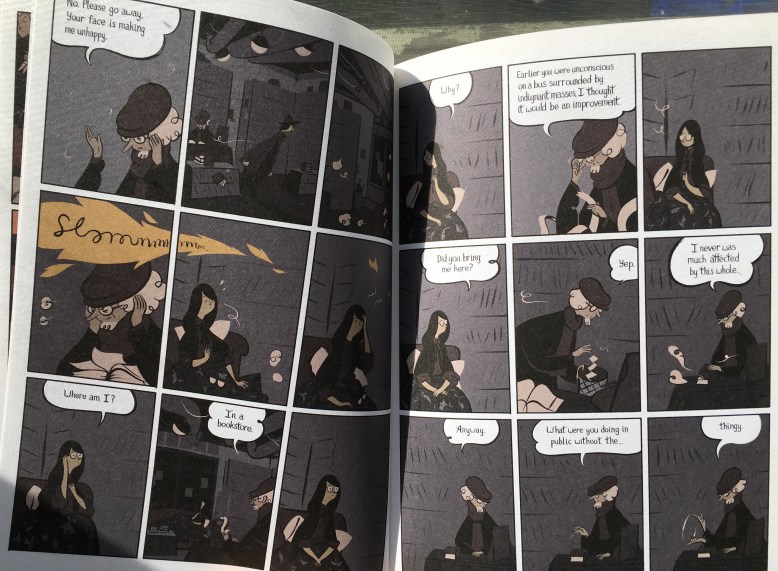
IMG_6395 It was fun to start the new year with this graphic novel. I love the conceptual nature of the narrative (the disappearance of and subsequent search for one’s innocence), and the drawing style has a fluid simplicity yet also a delightful precision to it. I couldn’t stop reading through this story and loved its idiosyncratic world. I wish I could spend more time in that world to get to know the protagonist F. Premise and the dynamics of the society she’s embedded in.

It’s so nice to see Nobrow Press making yet another engrossing work available!
IMG_6396

Open Notebook: Gotham Writer’s Workshop Writing Fiction book

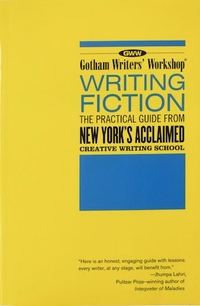
1023 It feels like all the things my undergraduate fiction writing classes didn’t cover or skimped on are given insightful attention in this highly readable resource. Here are some points that really resonated with me…

Think of yourself as a collector—of sensations, of objects, of names. Especially names.—Chris Lombardi

The first job of a story’s beginning is to start at the right time.—David Harris Ebenbach

With the first few paragraphs of a story of novel, you make a contract with the reader. You agree to tell a particular kind of story in a particular voice. Whatever you contract to do, as with POV, you contract to do it consistently.—Peter Selgin

The beginning of a story has to get three things done: it has to drop the reader right into the middle of the action, it has to provide all the necessary background information to get the reader up to speed, and it has to establish the major dramatic question.—David Harris Ebenbach Continue reading