…remind you of something?

.
.
. Continue reading

Intricate Landscapes and More: Hokusai at the MFA
 The Hokusai exhibit at the Museum of Fine Arts is stunning in scope, both in terms of the sheer number of works on display and the evident artistry that went into each one. Some of the scenes rendered in the woodcut prints are like microcosms you easily get drawn right into. Also impressive is the variety of media Hokusai worked in and the diversity of subject matters his pieces focus on.
This is a fabulously immersive and engrossing tribute to a remarkable, seminal master.

in the first few rooms…

…you’ve just barely scratched the surface; prolific only begins to describe the breadth of work here.

Amazing how much detail is in each of these prints.
Just Read: Aquarium
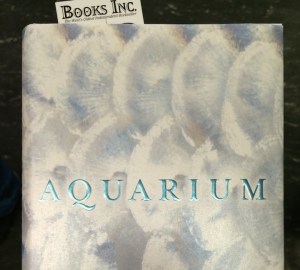 Rendered with a tenderness I didn’t know written language could have, this has got to be the most poetic novel I’ve ever read.
I feel like there’s a particular quietness that imbues the narration, even when it gets very intense, even frantic. That tone really pulled me into the protagonist’s world and mind.
It also makes transformation each of the main characters undergoes particularly striking.
Treasure Hunt With Kumiko is a Wild Goose Chase
 I see what The Verge is getting at in their review of Kumiko, The Treasure Hunter, but for the duration of the film, I just could not get past Kumiko’s central obsession; in an otherwise thoroughly grounded narrative, her irrational behavior just feels utterly implausible, not even surreal, and undermines the film for me. It just feels like I’m watching someone who’s lost her grip on reality in a peculiar, particular way for the entire 1.75 hours, which was indeed visual immersive but psychologically shallow.
Recently, The Making of a Story reminded me that narratives transpire “…in the sensory world, and in a world that embraces a complex emotional and intellectual subtext.” The sensory world is well developed in Kumiko, the Treasure Hunter, but that fails to bring me into the subtext. Clearly subtext lurks in the film, as The Verge has nicely described, but I’m so distracted by the protagonist’s mentally unhinged nature, the subtext remains uninteresting or at least obscured. When I can finally let go of the strangeness of Kumiko’s (delusional) quest, all I’m left with is a woman utterly stifled in a constrictive modern society, seeking freedom and self-sufficiency, finding those in the end when she and the film finally fully cross from reality into fantasy. Kumiko is the caged rabbit now released, unsuited to deal with world outside—until it can be remade by the sheer force of her desires?
The only thing that kept the story somewhat intriguing to me are the opening scenes, where we see that Kumiko has been at this treasure hunting for some time. Glimpses of her notebook full of memos and maps tell us that what’s she’s doing during the film is part of something larger, and just what has she been piecing together in that notebook? What led her to that cave and the buried VHS tape there? Sheer coincidence and a conspiracy-theory mentality that drives her to see the odd detail as a deeply significant clue? Or some larger circumstances with a Murakamian otherworldliness? Is it some twisted game someone is playing with her that has now all gone awry? Alas, those questions find no compelling hints.
Kumiko, the Treasure Hunter reminds me of World on a Wire and Starfish Hotel, mostly the latter. Both of those start out with situations that also make us wonder if we’re faced with a character losing his mind or with a world that is revealing its darker, stranger nature. Both of those films work beautifully with that wonder. Starfish Hotel does it so well that the end compels, even forces us to once again and for the final time wonder about the logic of its world. The end of Kumiko, the Treasure Hunter seems like it wants us to do that, but at that point, the logic of the world and logic Kumiko follows are clear to the point where I’m just not interested in wondering about anything in it any more.

No Artificial Coloring: turkey meatballs with red cabbage at Mission: Heirloom
This is by far the purplest meal I’ve ever eaten, and it was delicious, like all of the grain-free meals I’ve had at the Mission: Heirloom cafe have been.


Here’s a look at their shepherd’s pie; there’s a lot of ground lamb beneath the surface with some broccoli.


No Artificial Coloring: the red cabbage soda at Clover
Man, it was sweet.


Unboxing: Maker Edition Confidant Notebook by Baron Fig
 I received my order of Baron Fig’s latest limited edition notebook this week, and this has got to be the only notebook I’ve ever unboxed; that derives from the perhaps curious fact that Baron Fig’s Confidant notebooks are the only notebooks I’ve ever purchased that come in a box. The closest thing to this experience of opening the Confidant’s packaging is tearing the shrink wrap off a newly bought Moleskine.
And just as my initial handling of a newly bought Confidant is unparalleled by first experiences with other notebooks, using the Confidant is so far unparalleled as well. I’ve been working with Baron Fig’s Three-Legged Juggler limited-edition Confidant for about a month now, and it has made for fantastic episodes of notebook writing. Baron Fig has deftly done away with the annoyances I’ve faced with other notebooks. I’ve been delighted by the way the Confidant stays open in a more or less flat manner, then delighted by the feel of my Lamy fountain pen on the substantial (but not overly thick) pages, never worrying about significant bleed-through as I write. I’ve been so delighted that I had no reservations about getting Baron Fig’s latest version of the Confidant, the Maker, as my next notebook.
While opening it, I became very certain that more delight awaits…
“…everyone is crazy… life has messed all of us up” and other perspectives I really appreciate
But don’t get me wrong; though I feel the title How to Find Fulfilling Work overreaches, The School of Life has some great material in their books and videos that can help us keep it real. Here are a few of my faves.
Continue reading
Toward Self-Actualization In Career: How to Find Fulfilling Work vs. Alternatives
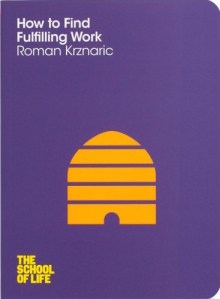 The title of this blog post may be somewhat of a misnomer, because WordPress won’t allow me to italicize or underline words in that title. It’s not referring to finding fulfilling work vs. settling on drudgery that pays the bills; it’s referring to the School of Life’s book and video How to Find Fulfilling Work and how it compares to a few other resources of the same ilk.
Imagine five parallel universes, in each of which you could have a whole year off to pursue absolutely any career you desired. Now think of five different jobs you might want to try out in each of these universes.—from How to Find Fulfilling work
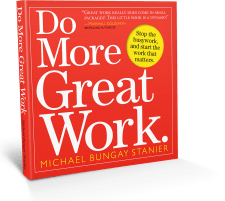 While the book How to Find Fulfilling Work and its accompanying summary video (below) offer some good thought-prodding perspectives, I’ve found that beyond the exercises offered in the book, How to Find Fulfilling Work is not as directly actionable as the guidance given in Do More Great Work and Finding Your Element. Those two books contain nicely guided activities aimed at leading you to specific and useful insights. Also, Simon Sinek’s Why Discovery Course is an invaluable approach to the “know yourself” portion of How to Find Fulfilling Work‘s recommendations, and Simon Sinek’s discussion of The Golden Circle in Start With Why (and his now classic TEDx Talk, embedded below) provides an excellent framework for understanding not only our own nature but that of organizations and movements.
How to Find Fulfilling Work is a good starting point, but readers of it should go beyond it by taking its advice to “think a lot” and structure that thought with additional resources.
What helpful resources for self-actualization and career fulfillment have you found?
Learn about happiness, learn to be happier
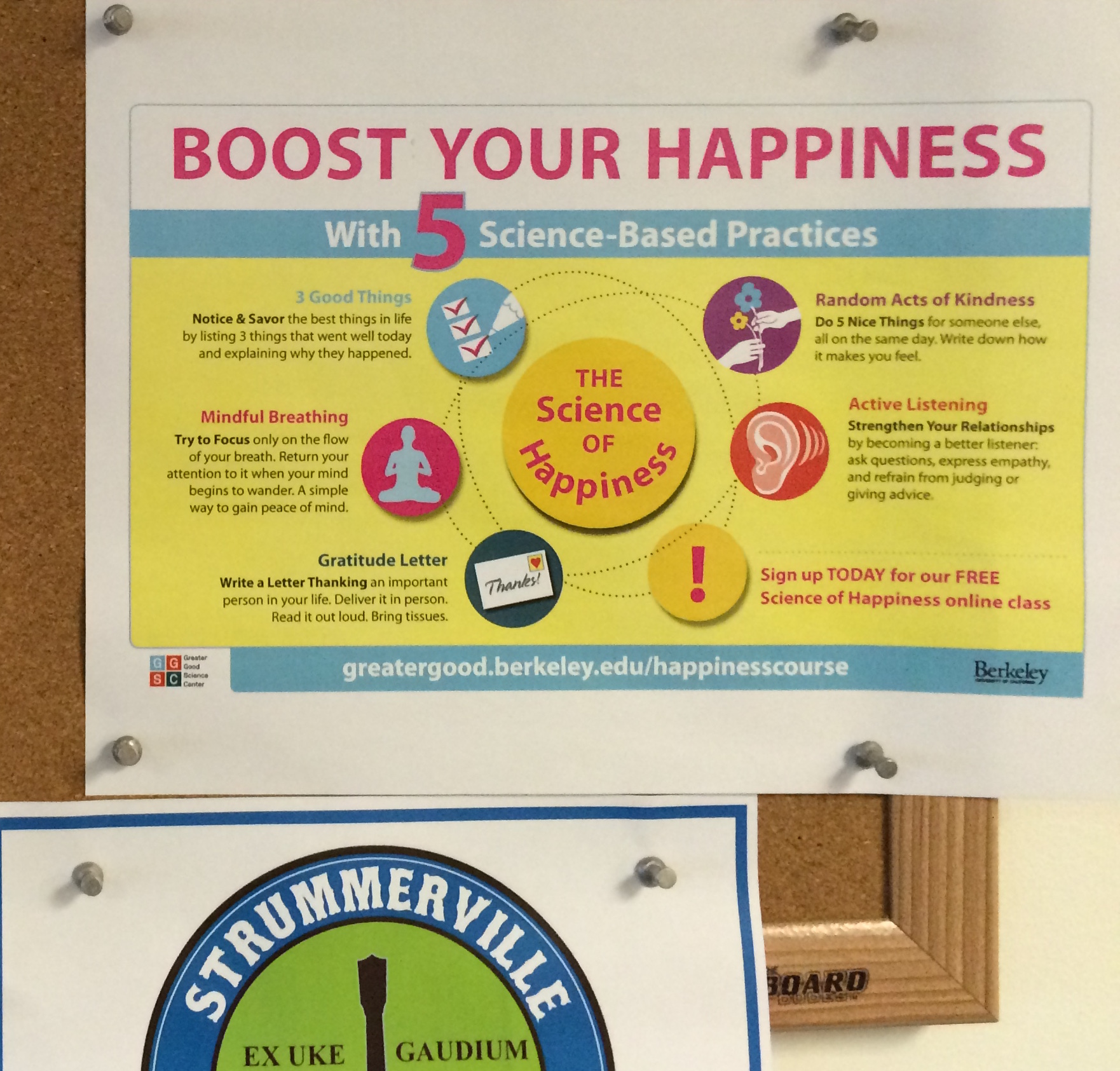 This flier for the edX course The Science of Happiness really caught my atttention recently; as a participant in this course and as someone who is interested in wellbeing, I was delighted to see this course publicized via good, old-fashioned bulletin board.
As an educator, I’m often skeptical of MOOCs; I really like the in-person discussion and hands-on learning the “traditional classroom” makes possible, but certain topics and approaches lend themselves well to an online approach (I think Lynda.com absolutely nails it), and edX’s The Science of Happiness is one such case where the course material works well in web-based experience.
I’ve been working on this course for a couple weeks now, and so far, it’s an informative, engaging consolidation on recent happiness (and related well-being) research presented in a straightforward way that’s even directly actionable at times. It’s what I would expect from the course instructors who work at the UC Berkeley Greater Good Science Center. The GGSC is a much need entity that collects and produces so much great material on, as they put it, “the science of a meaningful life.” I’ve been reading their articles for a few years now, and this course is the logical culmination of several enlightening, empowering thematic arcs in their work.
This edX course is self-paced, so if happiness is a topic that interests you, just jump right in!
 A Contemplative Compilation